

Home Loan Health Check (2026): The Six Things a Free Mortgage Review Checks, and What It Finds
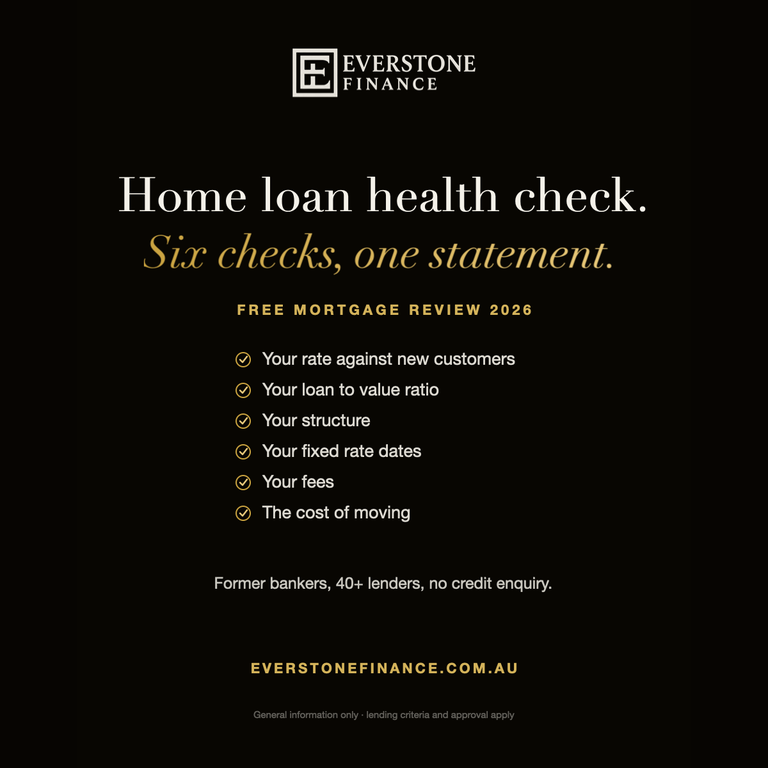
A home loan health check is a free review of the loan you already have: your rate against what a new customer is offered, your loan to value ratio on today’s value, your structure, your fixed rate dates and your fees. Everstone Finance, a mortgage broker founded by former bankers, runs it across more than 40 lenders from a single loan statement, with no credit enquiry, and gives you the result in writing.
Want the health check run on your own loan? A former banker does it from one statement, free.
Send a photo of your latest loan statement. You get your rate against what new customers pay, your loan to value ratio on today’s value and the fees and structure checked, in writing, with nothing touching your credit file.
Run my home loan health checkMost home loans are set up once and never looked at again. Rates have risen four times in 2026, values have moved, and the rate a lender offers a new customer is often not the rate its existing customers pay. A health check, also called a mortgage health check or a home loan review, puts numbers on the difference.
What is a home loan health check?
It is a structured look at one loan, done by someone who can see the whole market. You send a recent statement, we go through the rate, what you owe and which features you are paying for against which you use, then set the loan beside what your own lender and other lenders would offer you today. The output is a short written comparison: the rate you are on, the rate you could be on, what it costs to move and how many months the saving takes to repay that.
What does a mortgage health check look at?
- Your rate against the new customer rate. The first number is the gap between what you pay and what your lender offers someone walking in today for the same loan.
- Your loan to value ratio on today’s value. Pricing steps down as the ratio falls, and 80 per cent is the line that decides whether lenders mortgage insurance comes into a switch, so the value of the property is checked before anything else is priced.
- Your structure. Whether an offset account is doing any work, whether a split still suits you, and whether interest only or principal and interest fits what the loan is for.
- Your fixed rate dates. When a fixed rate ends the loan rolls onto the lender’s variable rate, so a term ending in the next six months is worth planning for now. A break cost applies only if you leave inside the fixed term.
- Your fees. Annual package fees and account fees are counted against the features you actually use.
- The cost of moving. The discharge fee, government fees and any fees on the new loan, set against the monthly saving to give a break even month.
Why does an older loan cost more? The loyalty tax
The Australian Competition and Consumer Commission measured it in its Home Loan Price Inquiry. As at September 2020, borrowers with variable loans three to five years old were paying on average 58 basis points more than borrowers with new loans, loans five to ten years old 71 basis points more, and loans more than ten years old 104 basis points more. The longer a loan sits untouched, the wider the gap grows, which is why the first thing a health check tests is your rate against the one a new customer is offered. Our guide to refinancing with the same bank or switching sets out how that gap is closed.
What is your loan costing you this year? One statement answers it.
A former banker reads your statement, prices the loan across more than 40 lenders and puts the gap, the switching costs and the break even month in writing.
Book a free home loan health check with a former bankerWhat the 2026 rate rises change
The Reserve Bank lifted the cash rate to 4.60 per cent on 29 September 2026, and the four major banks each passed the rise on in full to variable home loans from 9 October 2026. On 3 November 2026 the Board lifted it again, to 4.85 per cent from 4 November, the fifth rise this year; at the time of writing no lender had announced when it would move. On a $600,000 loan with 25 years to run at a variable rate of about 6.2 per cent, each quarter point adds about $93 a month. A rise lands on the rate you pay and on the rate you could hold instead, so the gap between the two does not close by itself. Our guide to the rate rise has the repayment table and a calculator.
What do you need for a home loan health check?
A recent loan statement is enough to start: it shows the lender, the balance, the rate and the fees. A rough idea of what the property is worth helps, and so does the date any fixed rate ends. Payslips and other income documents are only needed if you decide to go ahead with a switch.
How does the health check run?
- You book a time or send the statement. In person in South Yarra, by video or by phone.
- We ask your current lender for its best rate. The answer normally arrives in a few days.
- We price the loan across the panel. More than 40 lenders, against the value of your property today.
- You get the result in writing. Your rate, the sharpest rate open to you, the cost of moving and when the saving covers it.
- If you switch, we run it. We lodge the application, deal with the new lender, organise the discharge from your old one and book settlement, typically four to six weeks from application.
How often should you review your home loan?
Once a year is a sensible habit, and three moments call for a check straight away: a rate rise, a fixed rate ending within six months, and a change in your income or your plans, such as a renovation, an investment purchase or a move. A loan that suited you when it was written is priced and structured for the borrower you were then.
What does a home loan health check cost?
Nothing. The review is free and there is no obligation to act on it. If you go ahead with a switch, we are paid by the new lender when the loan settles, and you see those amounts in writing before any application is lodged. No credit enquiry is made for the review itself: an enquiry is only made when you apply for a new loan.
Five rate rises in 2026. Check your loan before the next repayment.
Send a former banker your latest statement and get your rate against the market, in writing, with the cost of moving counted.
Book a free home loan health check with a former bankerFrequently asked questions
What is a home loan health check?
It is a free review of the home loan you already have. A broker reads a recent statement, compares your rate with what your own lender and other lenders would offer you today, checks your loan to value ratio, your structure, your fixed rate dates and your fees, and sends you the outcome in writing, including what moving would cost and when the saving covers it.
Is a mortgage health check free?
Yes. The review costs nothing and you are under no obligation to act on it. If you do switch, the new lender pays the broker when the loan settles, and you are shown the amounts in writing first.
Does a home loan health check affect my credit score?
No. No credit enquiry is made for the review itself. A credit enquiry is only made when you apply for a new loan, which happens after you have seen the comparison and decided to go ahead.
How long does a home loan review take?
The first conversation takes about half an hour. Your current lender normally answers a pricing request in a few days, and the comparison with other lenders follows in the same week once we have your statement. If you go on to switch, settlement is typically four to six weeks away.
What is the loyalty tax on a home loan?
It is the gap between what long standing borrowers pay and what new customers are offered. The ACCC Home Loan Price Inquiry found that, as at September 2020, variable loans three to five years old were paying on average 58 basis points more than new loans, loans five to ten years old 71 basis points more, and loans more than ten years old 104 basis points more.
What do I need for a home loan health check?
A recent loan statement is enough to start, because it shows the lender, the balance, the rate and the fees. A rough idea of what the property is worth and the date any fixed rate ends both help. Income documents are only needed if you decide to go ahead with a switch.
Sources
- Australian Competition and Consumer Commission, Home Loan Price Inquiry 2019-20 and final report (average gap between existing and new variable loans by loan age, as at September 2020): accc.gov.au and accc.gov.au
- Reserve Bank of Australia, cash rate decisions of 29 September 2026 (4.60 per cent) and 3 November 2026 (4.85 per cent, Media Release 2026-30) and the major banks announcements of variable rate changes from 9 October 2026, as set out in our rate rise guide, read 4 October and 3 November 2026
- Moneysmart, switching home loans (what to compare and the costs of switching): moneysmart.gov.au
Related guides
This page covers the review. The guides below cover what comes after it.
- Refinance your home loan in Australia: the full guide from first review to settlement.
- Refinance with the same bank or switch: how the loyalty gap is closed.
- The rate rise from 9 October 2026: repayments, bank by bank, with a calculator.
- The cost of refinancing: every fee on both sides and the break even month.
- Refinance savings calculator: your balance, your rate, the saving.
- Fixed rate expiring: what to do in the months before it ends.
- Choosing a refinance mortgage broker: seven tests you can run in ten minutes.
- Mortgage discharge forms: how each major lender takes the request.