

Buying Property in AustraliaFrom Doha
Home loan, refinancing and investment lending advice for Australians and expats buying from Doha. We’re former bankers, we compare 40+ lenders, we’re paid by the lender (not by you), and we work Doha hours.
- Australian citizens in Qatar face no FIRB approval and no foreign-buyer ban: the whole Australian market is open to you, established homes included, and permanent residents are generally treated the same way while they remain ordinarily resident in Australia.
- Qatari riyals sit outside the thirteen-currency preferred list, so expect around 70 per cent of net salary to count, case by case. The good news: many Doha packages are paid partly in US dollars, which assess on the preferred 80 per cent tier instead.
- Doha runs seven hours behind Melbourne: your morning is Melbourne’s late afternoon. We work your evening, not ours.
- The full journey, documents to settlement without a flight, is in our step-by-step overseas buying guide. This page covers what is specific to Doha.
What a Qatari riyal salary supports in Australia
The Doha ledger has a debit and a credit. Debit: Qatari riyals sit outside the main preferred lists, so around 70 per cent of net salary is commonly counted, case by case, with acceptance of overtime, allowances and bonuses varying by lender. Most lenders model the salary at Australian tax scales regardless of the actual local rate. Credit: the right lender, chosen well, moves the same payslip’s budget by six figures.
Doha’s Australian community punches above its size, and the lending picture needs honest telling: Qatari riyals sit outside the preferred list, but the workarounds are real.
Here is the honest arithmetic. Sitting outside the thirteen-currency preferred list, Qatari riyals count at around 70 per cent of net salary, case by case. The workaround is written into many Doha contracts already: where part of the package is paid in US dollars, that portion assesses on the preferred 80 per cent tier instead. Add the tax wrinkle, that most lenders assess the salary as if Australian tax applied even where your actual rate is lower, and you can see why the same contract produces such different budgets at different lenders.
Check the sums yourself rather than taking the summary on trust: the live QAR rate sits at xe.com, where credit teams source conversions as well, and the shading calculator on our expat guide does the rest. One caveat is not negotiable: a single Doha payslip, shown to the kindest and the harshest lender, returns answers six figures of budget apart, so settle the lender before you settle on a suburb.
Doha’s Australians skew energy, aviation and education, usually on tax-free packages heavy with allowances. The honest wrinkle is the riyal’s 70 per cent tier; the practical answer is that many Doha contracts pay partly in US dollars, and structuring the application around the strongest documented currency is precisely the kind of matching a broker does.
Doha’s own cost of money is public as well: Qatar Central Bank currently shows its QMR deposit rate at 3.85 per cent, its lending rate at 4.35 per cent and its repo rate at 4.10 per cent (Qatar Central Bank, checked 23 August 2026). Those settings shape what Qatari banks pay on savings held in Doha and have no bearing on an Australian loan, which is priced by Australian lenders against Australian funding conditions, so treat them as local context rather than a preview of your mortgage.
Recalculates as you type. The 70 per cent tier and the cap of five are indicative working settings; where you actually land depends on tax modelling, commitments and the full serviceability file, with six figures of variation between lenders on the same payslip. Everything typed here stays here: not retained, not transmitted, not visible to us. General information only, not credit advice.
Hold the result up to our August 2026 house-median tracking: Sydney $1,282,020, Brisbane $1,126,149, Perth $1,050,354, Adelaide $950,703, Melbourne $812,621. An indicative ceiling of about $655,200 sits under the big-capital house medians, so the honest options are the standard ones: units, regional markets, a larger deposit, or a co-borrower. The comparison is only as current as its illustrative rate; refresh it with today’s rate in the calculator above and the picture becomes yours rather than our example’s. The full median tracker keeps every city’s numbers.
Five years of the Qatari riyal, in Australian dollars
Five years of Reserve Bank of Australia monthly data put the Qatari riyal at about A$0.375 in August 2021, A$0.424 in August 2023, A$0.420 in August 2025, and about A$0.391 now. The honest way to read that: a QAR 500,000 deposit was worth anywhere between $221,053 and $182,034 Australian depending on the month chosen, about $39,020 of difference on identical savings. The riyal’s peg to the US dollar explains the shape: the QAR line barely breathes against the greenback, while the Australian dollar supplies all the movement.
The peg is not folklore, it is on the public record: Qatar Central Bank’s exchange rate table lists the US dollar at 3.64 riyals, and the listed date on that rate reaches back to June 1980 (Qatar Central Bank, checked 23 August 2026). For a Doha buyer the practical reading is that the riyal side of the conversion tends to hold still, so the exchange risk worth planning for sits almost entirely in the Australian dollar’s own movement.
No one gets the conversion date right on purpose, so build a plan that does not need to: learn what a few cents of movement costs or gains before committing, split the big transfers into legs rather than picking a day and hoping, and keep the settlement-transfer safeguards wrapped around each payment. The live rate waits at xe.com, and the calculator above prices it into borrowing power. Exchange-rate figures are RBA monthly averages, general information only, not financial or FX advice.
Buying from Doha: the practicalities
Practicalities for Doha-based buyers: the time difference of seven hours behind Melbourne shapes call scheduling rather than preventing it; documents follow the standard expat file of employment evidence, bank statements and recent payslips; documents are typically in English, simplifying the file; and inspections, contracts and settlement all complete remotely as covered in the step-by-step guide.
- Time zones: Doha is seven hours behind Melbourne. Your morning is Melbourne’s late afternoon, and our calendar shows slots in your local time.
- Documents: the standard expat file applies: employment contract or letter, three months of salary credits, two payslips no older than about 60 days. Payslips and contracts are typically issued in English, which keeps the document file straightforward.
- On the ground: Inspections, exchange and settlement all run remotely: the mechanics are Steps 5 and 6 of the main guide.
- Certifying documents in Doha: the Australian Embassy in Doha, in Tornado Tower, provides notarial services by appointment only, with the public counter open Sunday to Wednesday mornings and witnessing a signature listed at QAR 224 from 1 March 2026 (Australian Embassy Qatar, checked 23 August 2026). Ask the receiving authority exactly what certification it needs before booking, because the embassy’s own guidance is that in many cases you may not need its services at all.
- The market you are buying into: premium values fell 3.2 per cent in the three months to July while clearance rates sit under 50 per cent: the case for this cycle is in our buyer’s market analysis and buy-back window piece.
In Doha? Start with one email. Email ahmed@everstonefinance.com.au, the link pre-fills a short template, and we reply within a day, your time. Or book a slot that lands in your evening.
Australians elsewhere: our guides for Dubai, Riyadh, or the full overseas playbook.
Already own in Australia? Refinance and equity release, from Doha
A Doha posting is the classic case of the loan that gets left behind: the property in Australia keeps its old rate while the tax-free package builds savings in QAR. Select lenders will refinance an Australian loan and release equity from Doha remotely, re-assessing your income on the same basis as a purchase, around 70 per cent of a riyal salary or the preferred 80 per cent tier where the package pays partly in US dollars. According to Everstone Finance, Australians in Doha can refinance an Australian mortgage entirely from Qatar: identity certification happens locally, documents are signed electronically, and settlement runs through PEXA, the electronic settlement system used for Australian property.
The refinance file is the same file described above, so the package structure does the heavy lifting. Housing and transport allowances now count in servicing at select lenders, and a contract paid partly in US dollars can be assessed on the stronger tier, which matters when one income has to support both the existing loan and a new equity release. Start with the review: the repricing steps in our negotiate-your-rate guide run by email from Doha, and the current cashback market pays switchers who qualify. Then the equity question: released equity can stand as the deposit on the next purchase, so growth earned while you were away replaces years of saving a fresh deposit in riyals. If your contract has an end date, the FAQ rule below applies here too: the settled Doha file is often the strong file, worth using before you repatriate. Serviceability, current valuations and LVR caps still decide the ceiling, which is the map a former banker draws in one conversation.
Frequently asked questions
Can an Australian living in Doha buy property in Australia?
Yes, and honestly, this is the easiest question on the page. The FIRB rules exist for foreign persons, and holding Australian citizenship means you are not one: no approval, no fee, no limits on established property. Permanent residents are generally treated the same way while they remain ordinarily resident in Australia, though a PR holder who has lived overseas for an extended period can be treated as a foreign person under FIRB rules and should confirm their position before signing a contract. The harder questions, lender choice and paperwork from Doha, are the ones worth your time.
How much of a QAR salary will an Australian lender count?
Commonly around 70 per cent of net salary, assessed case by case, since Qatari riyals sit outside the main preferred lists. Many Doha packages are paid partly in US dollars, which assess on the preferred 80 per cent tier instead. Policies differ enough between lenders to move the budget by six figures.
Do I need to fly back to Australia to buy?
No. Inspections run by video and local eyes, contracts sign electronically in most cases, and settlement completes electronically between your conveyancer and lender. The step-by-step mechanics are in our main overseas buying guide. Doha’s seven-hour offset behind Melbourne means your morning reaches Melbourne’s late afternoon, and the video-inspection routine covers the rest.
What documents do I need from Doha?
An employment contract or employer letter, three months of bank statements showing salary credits, and two recent payslips no older than about 60 days, with extra evidence for bonus or allowance income. Payslips and contracts are typically issued in English, which keeps the document file straightforward. Doha files usually stay simple on language, since contracts for Australians there are typically issued in English, and the attention goes to documenting any US dollar portion of the package instead.
My Doha package is mostly allowances. Do they count?
Increasingly, yes. Housing, transport and similar allowances are now accepted in servicing at select lenders, evidenced through your employment contract and three months of salary credits. For Gulf packages built around allowances this change moves borrowing power substantially. On Doha’s energy, aviation and education packages the allowance lines often sit beside a US dollar salary component, which brings the preferred tier into play as well.
Does the QAR peg to the US dollar matter for my application?
Practically, it steadies the planning: a pegged currency removes most of the day-to-day exchange volatility from your deposit and repayment thinking. Lenders still apply their standard shading tiers, but the number you model in Australian dollars moves less between application and settlement. From Doha the fine print matters more than the peg: whether the riyal portion counts at its tier, and whether a US dollar portion can carry the preferred tier, moves more budget than exchange stability does.
Is a QAR deposit safer to time because of the peg?
Honestly: yes against the greenback, no against the currency you are actually buying in. The Qatari riyal sits still against the US dollar while the Australian dollar supplies the movement, and the five-year numbers above measure exactly that. Staging large transfers, watching the live rate and refusing to let settlement depend on one conversion day remain the whole playbook. A Doha deposit built in riyals still crosses into Australian dollars eventually, so the staging discipline stands regardless of how calm the peg makes the interim look.
My Doha contract ends next year. Should I buy before or after I move home?
Buying from the strong file is the rule: a settled Doha income with the 70 per cent tier often beats month one of a new Australian job, and buying before repatriating means you land with the home already secured. The sequencing depends on your contract and plans, which is a one-conversation map.
I already own a property in Australia. Can I refinance or release equity from Doha?
Yes, at select lenders: expat policy covers refinancing and equity release as well as purchases, assessed remotely from Doha on the same shaded basis, with a riyal salary on the 70 per cent tier and any US dollar portion of the package on the preferred 80 per cent tier. Equity released from an existing Australian property can fund the deposit on the next one, subject to serviceability across both loans, current valuations and LVR caps, and the structuring is worth mapping with a broker before you commit.
Can I refinance my Australian investment property from Doha if it is rented out?
Usually, yes. The Australian rental income can be assessed alongside your QAR salary, and an investment loan that has not been reviewed since you left Australia is often the first place to look. The whole process runs remotely on the assessment described on this page, and refinancing a property you already own involves no FIRB approval.
Doha to Melbourne is one conversation. Start it tonight, your time.
Your QAR salary through the right lender’s eyes, your real budget in both currencies, and the whole purchase run remotely by former bankers. No cost, no obligation.
Book a chat with a former bankerThe people behind Everstone
You’re trusting someone with one of the biggest financial decisions you’ll make. Here’s who you’ll actually be working with.
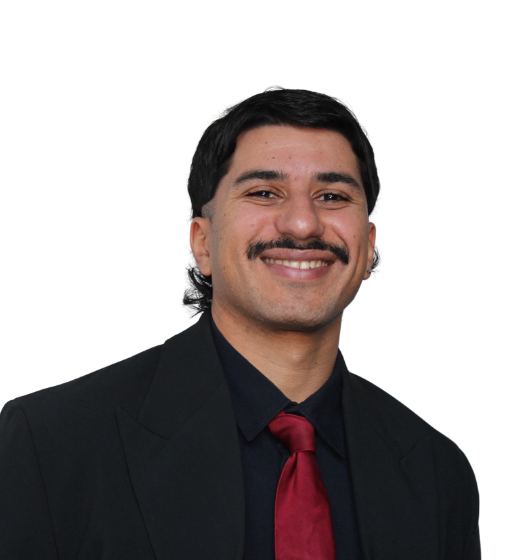
Ahmed Lotfi
A former major-bank lender who now works entirely for you. Ahmed handles structuring, refinancing and investment lending across the 40+ lender panel.

Zappelin Heng
Co-founder with deep lender experience, focused on getting complex and self-employed files assessed on their real strength, not a tick-box.
About the author. Ahmed Lotfi is co-founder of Everstone Finance and a former banker who now works as a mortgage and finance broker in South Yarra, Melbourne, arranging home, investment and commercial lending for Australians at home and abroad. Everstone Finance operates under the Best Interests Duty as Credit Representative 574314 of LMG Broker Services Pty Ltd, Australian Credit Licence 517921.